
The US Fed interest rate decision, domestic macroeconomic data announcements and ongoing quarterly earnings are some of the major factors that will drive the stock markets in a holiday-shortened week, analysts said. Besides, monthly auto sales numbers and the LIC IPO will also remain in focus, they added. Equity markets will remain closed on Tuesday for Id-Ul-Fitr (Ramzan Id). "The market is likely to kick off this week on a sombre note after a sharp fall in the US market then the focus will shift to the outcome of the US FOMC meeting, which is crucial amid record inflation and growth worries.
In their advertisements to attract investors to public offers, companies can be more creative and innovative as long as they are not misleading and contain necessary disclosures of associated risks and other facts, Sebi chief U K Sinha feels.
LIC public offer, the country's biggest-ever IPO, on Wednesday opened for subscription for retail and institutional investors. The government aims to generate about Rs 21,000 crore by diluting its 3.5 per cent stake in the insurance behemoth. The LIC initial public offering (IPO), now open for retail and institutional investors, is set to close on May 9. LIC has fixed the price band at Rs 902-949 per equity share for the issue.

The three companies have been issued observations by the watchdog, according to the update on the processing status of draft offer documents as on October 8. An observation letter is mandatory for an initial share sale. In Sebi parlance, the issuance of observations implies its go-ahead for the IPO. One Mobikwik Systems Ltd is a leading mobile wallet (MobiKwik Wallet) and Buy Now Pay Later (BNPL) player in India.
Shares reserved for Qualified Institutional Buyers (QIB), including banks and mutual funds in the LIC's public offer were subscribed fully on Monday morning, taking the overall subscription of the issue to a little over 2 times. Against 3,95,31,236 reserved, 4,61,62,185 bids were received, reflecting a subscription of 1.17 times, according to data posted on stock exchanges at 12:12 pm. Non institutional investors' portion was subscribed 1.38 times.

The new corporate governance norms for listed companies, currently being finalised by the Securities and Exchange Board of India, may also mandate greater disclosures regarding IPOs, sources said.

The retail frenzy over initial public offers (IPOs) seen over the past few months is not without reason. Over the past two years, 61 companies have tapped the primary market and raised funds via IPOs. Of these, 24 companies (nearly 39 per cent companies) have more than doubled at the bourses with Happiest Minds, IndiaMart Intermesh, Indian Railway Catering and Tourism Corporation (IRCTC), Affle India and Route Mobile surging 468 per cent to 722 per cent since their listing date till now. Retail participation in the equity market, according to analysts, has just reached an inflection point due to the low interest rate regime amid lack of investment-worthy avenues that can generate a good return for investors.

Equity supply may hit Rs 6 trillion soon.

IPO-bound hospitality major Oyo's India Chief Executive Officer (CEO) Ankit Gupta and the head of its Europe business Mandar Vaidya have resigned. A company spokesperson told Business Standard that the two had moved on from their roles six months ago in March 2023. During the same period, Oyo had rejigged its top management, where the company's COO Abhinav Sinha was reassigned as Chief Product and Technology Officer, while Chief Business Development Officer Anuj Tejpal was reappointed as Global Chief Merchant Officer.

Capital markets regulator Sebi on Wednesday streamlined the payment of processing fee through the Unified Payments Interface (UPI) system for shares applied for and allotted during an initial public offering (IPO). In addition, the regulator has devised a new reporting format for capturing the data of all ASBA (Application Supported by Block Amount) applications unblocked by Self Certified Syndicate Banks (SCSBs) and their corresponding date of actual unblock. The new format has been put in place after reviewing the performance of SCSBs on timely unblocking of application amounts and feedback received from market intermediaries, Sebi said in a circular.

Pipeline leanest since 2004; bankers said to be cautious due to fear of rejection by Sebi.

Zomato on Monday became the first new-age company to join the prestigious 30-share benchmark Sensex, replacing JSW Steel. This milestone marks a significant achievement not only for Zomato but also for the Indian startup ecosystem, which is increasingly making its presence felt in the $5.2 trillion listed ecosystem.

Barbeque Nation IPO: The promoters hold 60.24 per cent stake, CX Partners owns 33.79 per cent and Rakesh Jhunjhunwala's investment firm Alchemy Capital holds 2.05 per cent in the company.

More than 60 small and medium enterprises (SMEs) are expected to tap the market in one year to raise equity funds for supporting their business requirements, a BSE top official said on Wednesday. These companies will get listed on the exchange's SME platform, Ajay Thakur, head of BSE SME and Startup told PTI. Last year, only 16 SMEs had tapped the initial public offering (IPO) route and raised Rs 100 crore.
.jpg)
Government divestment reached record figures after the financial crisis, at the same time as promoters were required to bring down their stake in companies to 75 per cent or less.
Hospitality and travel-tech firm OYO is looking to launch its initial public offer after September and has written to stock market regulator Sebi, seeking to file updated and restated consolidated financial information. The company, which had filed preliminary papers with Sebi to raise Rs 8,430 crore through an initial share sale in October last year, is now prepared to settle for a lower valuation of around $7-8 billion against the $11 billion it was targeting initially, according to people in the know of the development. OYO's move to launch the IPO after the September quarter is mainly driven by the expectation of improvement in its financial performance and the current volatile nature of the market, they said.
Markets regulator Sebi is contemplating reforms in the IPO norms, especially on the book building, fixed price aspects and certain provisions pertaining to price band, its chief Ajay Tyagi said on Wednesday. Apart from initial public offer (IPO), the regulator is looking into further reforms on preferential issue front, Tyagi said at the FICCI's annual Capital Market Conference. He further said that the focus on review of equity fund raising norms will continue in the near future.
Just 14 companies raised Rs 35,456 crore through main-board primary share sales in the first half of the fiscal, down 32 per cent from the year-ago period when 25 issues had mopped up Rs 51,979 crore. But according to Prime Database, the IPO pipeline is strong with 71 issues worth Rs 1,05,000 crore having Sebi approvals and another 43 worth about Rs 70,000 crore are awaiting approval. Of these 114 planned issues, 10 are new-age tech companies, which are looking to raise roughly Rs 35,000 crore.

PB Fintech, the parent of Policybazaar and Paisabazaar, has set a price band of Rs 940-950 apiece for its initial public offering (IPO), which will open on November 1 and close on November 3. The company may be valued at around Rs 44,000 crore, and looking to raise an amount of around Rs 5,826 crore. The IPO comprises a fresh issue of Rs 3,750 crore, along with an offer for sale (OFS) of Rs 1959.72 crore by existing promoters and shareholders.


The number of dematerialised (demat) accounts - required to hold shares and other securities in electronics format - crossed the 150-million mark for the first time in March. In March, 3.12 million new demat accounts were added despite a spike in market volatility, taking the total count to 151.4 million. The milestone has come 19 months after the total number of demat accounts hit the 100-million mark, a sign that more domestic households are taking to direct equity investing.
Through anchor allotment, a firm can demonstrate the demand for shares by getting marquee investors on board.

Out of 11 companies that got listed in 2019, nine have outrun the market by gaining more than 10 per cent against their respective issue price.

Zomato's initial public offer (IPO) is scheduled to open for subscription on July 14 and is priced between Rs 72 - 74 per share. At the upper end of the price band of the offering, the company aims to raise Rs 9,350 crore. Most analysts have given a 'subscribe' rating to the issue for listing gains.

Ola Electric share price strategy: The meteoric rise of Ola Electric share price has left analysts and investors bewildered. Yet, they suggest investors hold on to the stock as it remains a pure "momentum" play. Since its listing on August 9, the stock has surged 92 per cent (till August 19) over its issue price of Rs 76, taking its market capitalisation to a little over Rs 63,000 crore.

Markets regulator Sebi has kept in abeyance the processing of Go Airlines' draft papers for an initial public offer worth Rs 3,600 crore. Go Airlines (India) Ltd, which has announced rebranding itself as 'Go First', filed preliminary papers for an initial share sale worth Rs 3,600 crore in May. The proceeds will be mainly used to repay dues. The "issuance of observations (has been) kept in abeyance", according to Sebi's latest update on processing status of Go Airlines' draft offer documents. The information was updated on June 25. In Sebi parlance, issuance of observations implies its go-ahead for the IPO.
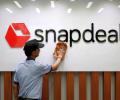
E-commerce platform Snapdeal has filed preliminary documents with markets regulator Sebi to raise funds through an initial public offer (IPO), joining the league of internet-led businesses looking to list on domestic stock exchanges. The public issue comprises fresh issuance of equity shares worth Rs 1,250 crore and an offer for sale (OFS) of 3.07 crore equity shares, according to the draft red herring prospectus (DRHP). According to market sources, potential listing could value Snapdeal at about $1.5-1.7 billion.

For the third month running, investors opened over four million new demat accounts in February, showing growing household confidence in stock markets and their increased risk appetite. Over 13.12 million new demat accounts have been opened in the last three months, taking the total count close to the 150-million mark. Demat accounts are needed for trading and holding shares electronically.
The government has shortlisted Cyril Amarchand Mangaldas for giving legal advice on upcoming mega IPO of India's largest insurance company LIC, an official said. Four law firms - Crawford Bayley, Cyril Amarchand Mangaldas, Link Legal and Shardul Amarchand Mangaldas & Co - had made presentations before the Department of Investment and Public Asset Management (DIPAM) on September 24. Following presentations, Cyril Amarchand Mangaldas has been selected as legal advisor for the initial public offering (IPO) of Life Insurance Corporation (LIC), the official told PTI.

Indian companies have raised $1 billion so far this year - almost four times what they raised last year.
The primary market has seen hectic fundraising activity in April-November 2021, with 75 companies garnering Rs 89,066 crore through their IPOs, much higher than in any year in the last decade, Economic Survey showed on Monday. Moreover, a flurry of technology startups made their public debuts during the period. In comparison, 29 companies raised Rs 14,733 crore through initial public offerings (IPOs) during April-November 2020.

The year 2021 could turn out to be India's year of IPO with the domestic unicorns through their public issues setting "domestic stock markets on fire and global investors in a frenzy", an RBI article said on Tuesday. The successful Initial Public Offerings (IPOs) by new age companies in the recent months are a reflection of bullishness about Indian technology, it said. "...growth impulse is igniting financial markets. 2021 could well turn out to be India's year of the IPO.

Blue Origin's 10th human flight, NS-30, will lift off from Launch Site in West Texas on Tuesday, February 25.

'Opportunity is there in each segment of the market. There is opportunity in affordable and specifically governed by government initiatives as well as for housing for all.'
The government is likely to cut the size of the initial public offering of LIC to 3.5 per cent to raise around Rs 21,000 crore from the issue which would hit the capital markets in the first week of the next month. The government in February had planned to sell a 5 per cent stake in Life Insurance Corporation (LIC). However, the ongoing market volatility due to the Russia-Ukraine war has made it lower the IPO size. At this price, LIC, which is 100 per cent government-owned, is valued at Rs 6 lakh crore.

The so-called high networth individual portion saw 620x more demand than shares on offer.
Digital financial services firm Paytm has received market regulator Sebi's approval for its Rs 16,600 crore initial public offer, a source involved in the process said on Friday. The company expects to hit the bourses by the end of this month and is planning to skip the pre-IPO share sale rounds to fast-track listing.

'The race is now on for Indian IT firms to develop their AI prowess and focus on a software-first approach to services as the people element becomes more complicated with Trump's expected new regulations.'

Motor sport racing company Formula One has delayed its Singapore initial public offer worth up to $3 billion due to weak markets, with the sport's boss and part-owner, Bernie Ecclestone, saying the firm is waiting until the time is right.
The Centre is unlikely to reduce its shareholding in Life Insurance Corporation of India (LIC) for at least 2 years following the insurer's listing because such a move could affect returns for investors participating in the mega initial public offering (IPO). The government's stance was communicated to prospective investors during roadshows after many of them sought clarity on the Centre's plan for lowering its shareholding in the insurer to meet the minimum public shareholding norms. To this, the Centre maintained its stand that it would not look at any equity dilution in the insurer for at least two years to avoid downward pressure on LIC's shares.
